// Rising Company

Capture

Capture hosts screenshots for GitHub pull requests. Upload an image from your terminal or your coding agent and get back a link and a line of markdown to paste.

$ capture login
Signed in as ada@example.com
$ capture checkout.png --alt "checkout after the fix"
![checkout after the fix](https://capture.rising.company/i/Xk3f9aQ2…pQ.png)
Uploading needs a Rising ID · Anyone with a link can view the image · Free
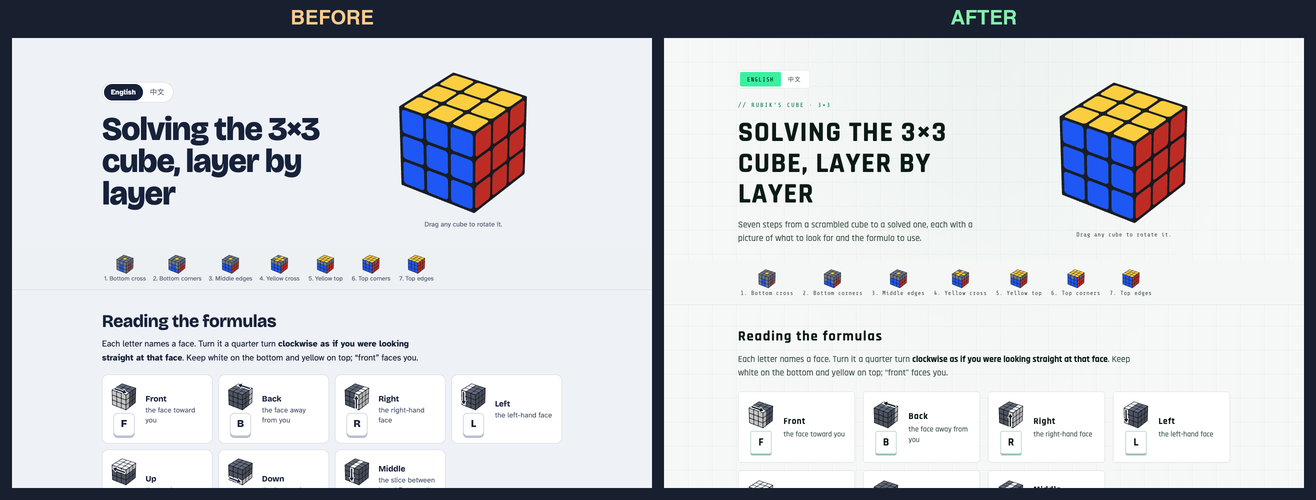
A pull request comment showing a before and after screenshot of a Rubik's cube tutorial page, restyled from a rounded sans-serif look to a monospace, grid-paper look.
What a reviewer sees: the before and after, right in the pull request.

A screenshot in, a link out

A pull request can only show an image that has a URL. Capture gives a screenshot a URL that GitHub can display. That’s all it does.

It does
  • Stores a PNG, JPEG, WebP or GIF of up to 4 MiB.
  • Gives it a permanent, unguessable link on capture.rising.company.
  • Hands back a line of markdown you can paste into a PR, issue or review comment.
  • Serves the image to anyone who has the link, so GitHub can show it.
It does not
  • Make images private. If someone has the link, they can see the image.
  • Host video or SVG. Turn a recording into a GIF first.
  • List, search or share your images with anyone else.
  • Serve images for websites. It's for review evidence, not assets.

Three steps

01

Sign in once

Run capture login. A browser tab opens, you sign in with your Rising ID, and the CLI is connected. A new account can upload once an admin approves it.

02

Upload the image

Run capture <file>, or let your coding agent do it with the Claude Code skill or the MCP server. Capture checks the file is really an image before storing it.

03

Paste the markdown

Capture prints one line of markdown. Paste it into the pull request and the screenshot shows up for every reviewer.

Three ways to upload

All three upload as you, using the same Rising ID sign-in.

For people

The capture CLI

$ npm i -g https://capture.rising.company/capture-cli.tgz
$ capture login
$ capture shot.png
# several at once: capture a.png b.png

Prints one markdown line per image, so it works inside gh pr create --body.

For Claude Code

The share-screenshot skill

$ capture skill install
# writes .claude/skills/share-screenshot

Teaches your agent when to upload, what to keep out of a screenshot, and how to turn a recording into a GIF small enough for GitHub.

For any MCP client

The MCP server

$ capture mcp install
# runs claude mcp add for you

Tools: upload_image, list_uploads, delete_upload. The endpoint is https://capture.rising.company/mcp.
Read this once

The link is the only lock

GitHub shows images by fetching them anonymously, so there is no login to view one. Anyone who has an image link can see the image. Links are long and random, and nobody can browse or list them. Even so, never upload passwords, keys, or customer data you wouldn’t put in a PR.

Deleting does not take an image back

You can delete an upload on the Uploads page or with capture delete, and Capture stops serving it within a couple of minutes. GitHub may keep its own cached copy, so also edit the comment that links to it.

Who can upload

Anyone with a Rising ID can sign in. Uploading starts once an admin approves the account, so Capture doesn’t become a free image host for strangers. Until then, the Uploads page says the account is waiting for approval.

Text belongs in text: paste stack traces, logs and diffs as code blocks. Use a screenshot when how something looks is the evidence.

Your next PR, with pictures

Sign in once with Rising ID, wait for approval, then every screenshot is one command away from a reviewer.